
MONTHLY CYCLE
SALES & OPERATION - PLANNING
- From 3 months to 2 years
- Alignment of profit and loss targets (P&L)
- Supply and demand alignment
Simulative Control Tower is an essential tool to improve supply chain visibility and responsiveness. Through a virtuous cycle, the tool increases global visibility over the entire process. Its simulative approach allows different possible scenarios to be compared, analysing and quantifying the resulting impacts, making it possible to provide effective and rapid decision-making support (simulation and response).
Together with the now well-established concept of process orchestration, sedApta’s Simulative Control Tower allows structured process collaboration in real time between people, activities and tools throughout the supply chain, including collaboration with suppliers, outsourced manufacturers and customers, all supported by contextual information and online discussions.
The sedApta approach allows all the process stakeholders to be synchronised and co-ordinated, transferring the right information to the right role at the right time, to efficiently conduct a specific process activity while simultaneously aligning planning (S&OP), scheduling (S&OE) and execution (MOM).
Together with the typical functionalities of the orchestration process, Simulative Control Tower is further enriched by Machine Learning and Artificial Intelligence algorithms.
The control tower provides visibility across the entire supply chain, structured around four planning levels: financial impact, S&OP (monthly cycle, three months to two years), S&OE (weekly cycle, zero to three months) and MOM (real-time execution, zero to two weeks). More than 140 pre-built KPIs are available, and each can be drilled into for root-cause analysis.
SALES & OPERATION - PLANNING
SALES&OPERATION - EXECUTION
From 0 to 3 months
Planning of distribution needs
Production planning and programming
OPERATIONAL EXCELLENCE
From 0 to 2 weeks
Allocation of short-term priorities
Analysis of "how built" vs. "as planned"

![]()
FINANCIAL IMPACT ANALYSIS
ANALYSIS OF THE IMPACT ON ECONOMIC VALUE
PERFORMANCE MONITORING
COMPROMISE DECISION
4P APPROACH: PRODUCT-PRICE-PROMOTION-PLACE

When the control tower flags a risk or opportunity, planners can trigger what-if simulations directly from the dashboard. Modelling the downstream impact across demand, inventory, production scheduling and order promising. The simulation engine works with both sedApta modules and connected third-party systems, so the scenarios reflect your full operational picture.

DEMAND MANAGEMENT
Collaborative mathematics forecast

INVENTORY MANAGEMENT
Management of the distribution center
MRP Make
MRP Buy

PLANNING & SCHEDULING
Size of the production system
Choice on make or buy
Production plan and finished capacity
Verification of production Constraints
Check material availability

ORDER PROMISING
Assignment of stocks
Order Managements
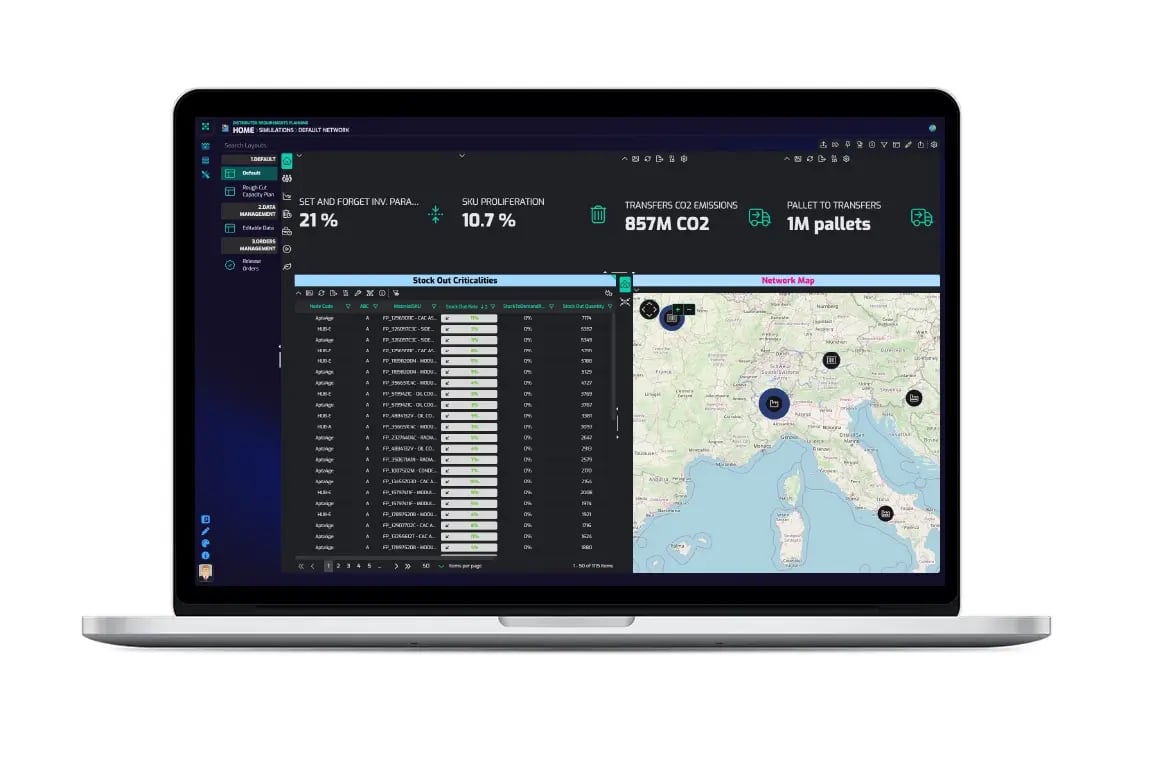
The control tower uses configurable thresholds to flag exceptions - demand spikes, supply shortfalls, capacity breaches - and routes them to the right role. Rather than relying on static reports, planners and managers see alerts in real time, in the context of the KPIs they affect.
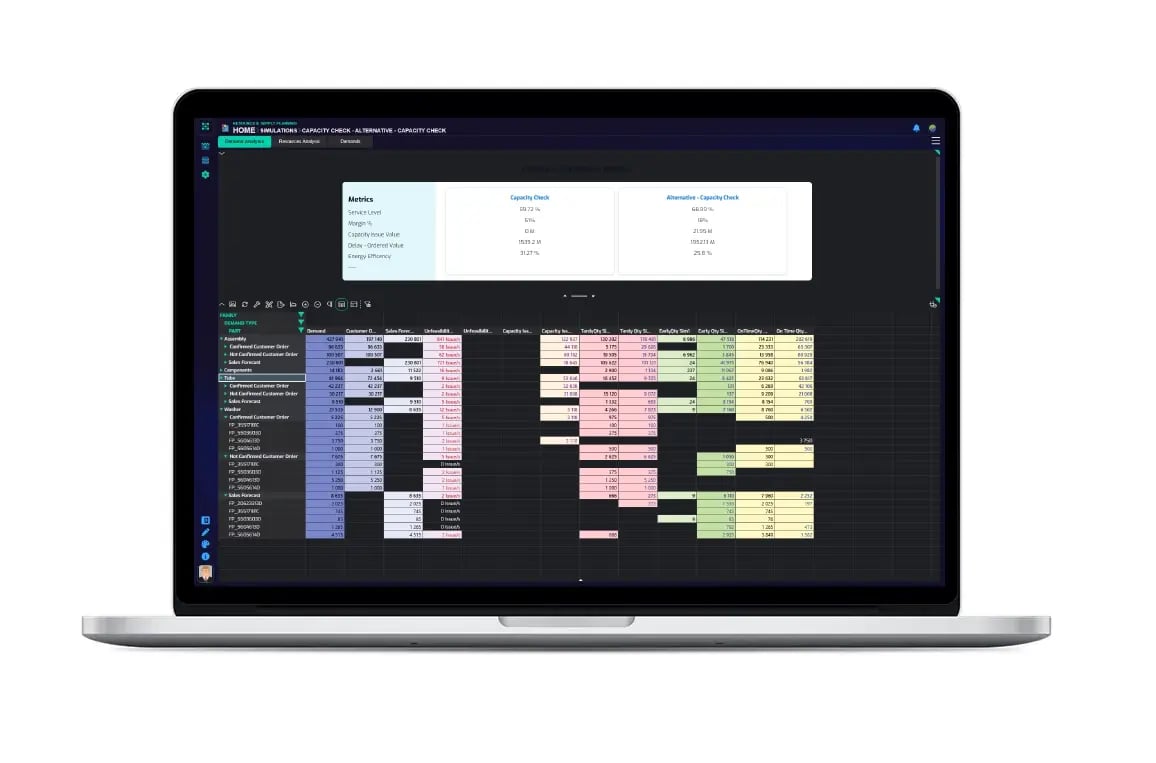
When disruptions occur, the control tower quantifies their impact across the metrics that matter: service level, revenue exposure, inventory build-up and late-order risk. This gives leadership teams the data they need to prioritise responses and allocate resources where they’ll have the most effect.
Once a course of action is agreed, the control tower’s confirmation workflow pushes the approved plan into execution. Assigning tasks to the right teams and updating schedules across planning and operations. This closes the loop between scenario analysis and operational action.